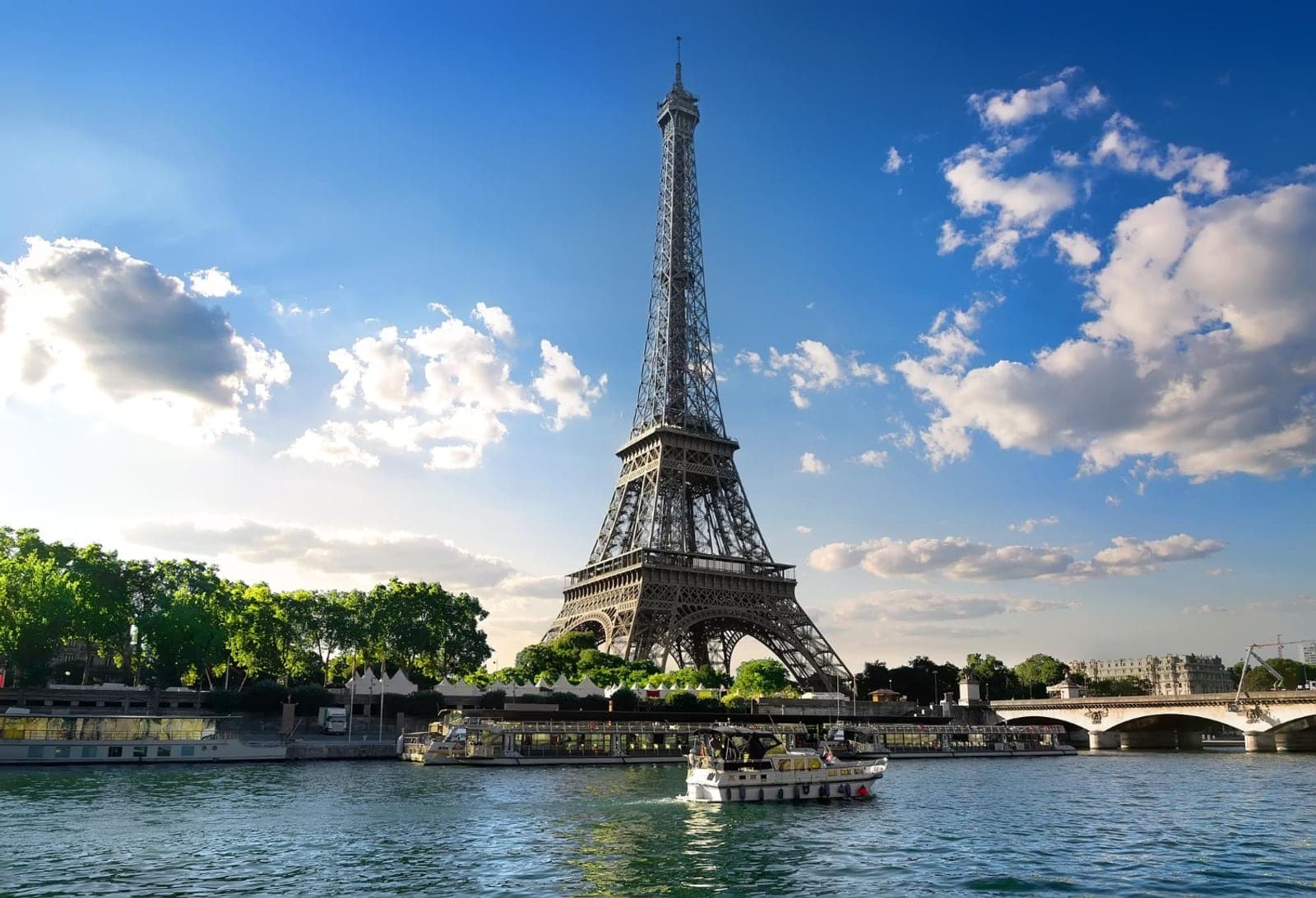
For Montreal–Paris, plan on around CA$686 for a round trip. It’s a deal when the fare drops clearly below its usual level, especially if your dates are flexible.
At a glance
- Typical price
- CA$686a round trip, the middle of tracked prices
- Real deal
- −20% or morebelow the usual fare Google shows
- Nonstop
- 50%of tracked trips
- Cheapest
- January, Octobercheapest departure months
Cheap Montreal–Paris flights: how much should you pay?
For a cheap plane ticket, the lowest price tracked from Montreal is CA$680. The cheapest departures come up in January and October, while June tends to cost more. To spot a real deal, always compare against the usual price and keep some flexibility in your dates.
| From | Typical price | Lowest seen | Nonstop | Trips tracked |
|---|---|---|---|---|
| Montreal YUL | CA$686 | CA$680 | 50% | 6 |
| Quebec City YQB | CA$829 | CA$757 | 39% | 23 |
- lowest tracked
- CA$680
- typical price
- CA$686
The lowest price tracked, day after day
Nonstop or one-stop flights from Montreal, any travel dates.
- Chosen observation
- CA$869
- First observation of this trip.
- Lowest observed
- CA$869
- Highest observed
- CA$869
Only one observation so far. More comparable observations are needed to show a trend.
How to read this chart
1 observation(s) · Times at the departure airport. Lines connect observations; they do not prove continuous availability. Dotted stretches mark more than two days without an observation.
How do I get alerted to a deal to Paris?
The price to watch: under CA$680. Create a Montreal → Paris radar: it watches prices for you and tells you by email or Discord as soon as a fare drops there.
With Premium, the alert goes out as soon as the deal appears, instead of waiting for the weekly digest. Explore Premium →
Why go to Paris?
Paris has that rare mix of grandeur and neighborhood life. You can go from a very theatrical avenue to a quiet street where the facades, cafés and bakeries make it feel as if the city is telling its own story. It works just as well if you come for the art as if you simply want to walk, stop, people-watch and follow the Seine.
What makes Paris unique is the way different eras stay visible without freezing the city in time. The monuments are not just postcards: they become landmarks as you move from one bank to the other, from one neighborhood and mood to the next. Flight Deal Spot’s tracking has already seen CA$824 for a departure in November, a reminder that the right window can make this classic trip more accessible.
A little history
Paris grew around the Seine, on land associated with the Parisii, a Gallic people. Julius Caesar mentions Lutetia in fifty-two BCE, and the Roman city developed on the Left Bank as well as on the river islands. That river origin still matters: for a long time, Paris was organized around bridges, quays, markets and seats of power set close to the water.
In the Middle Ages, the city became a major religious, intellectual and political center. Construction on Notre-Dame began in eleven sixty-three, while the schools of the Left Bank drew students from far away. Under Philip Augustus, Paris was fortified and took on a more urban form, with centers of power, trade and knowledge that still shape its character.
The French Revolution broke out in Paris with the storming of the Bastille on the fourteenth of July, seventeen eighty-nine, and the city changed again under the major works led by Haussmann starting in eighteen fifty-three. The eighteen eighty-nine World’s Fair gave the capital the Eiffel Tower, disputed at first and later turned into a symbol. On the twenty-fifth of August, nineteen forty-four, the Liberation of Paris marked another defining moment in its modern history.
Neighbourhoods to explore
Partner links: if you book through them, we earn a small commission at no extra cost to you.
Le Marais
Le Marais keeps an old-world elegance, with its private mansions, hidden courtyards and streets that turn without warning. It’s an ideal neighborhood for wandering between galleries, boutiques, bakeries and small squares. It takes on a lovely energy in the late afternoon, when the terraces fill up and the facades warm in the light.
Tip: Step into the passages and open courtyards when you see them, because the neighborhood often reveals itself behind doors.

Saint-Germain-des-Prés
Saint-Germain-des-Prés has kept its literary aura, even though the neighborhood has become chic and highly sought-after. You’ll find bookstores, historic cafés, galleries and elegant streets that invite you to slow down. Morning suits it well, when the shop windows open and the Left Bank still has a gentle rhythm.
Tip: Leave time to sit on a terrace and watch the comings and goings rather than just passing through the neighborhood.

Montmartre
Montmartre was long a village apart, perched on its hill, with its stairways, studios and views over the rooftops. The neighborhood can be lively, but you only have to leave the best-known routes to find quieter little streets again. Go early or in the evening to feel its more intimate side.
Tip: Climb up by the side streets and walk back down, because much of Montmartre’s charm is in the route itself.

Canal Saint-Martin
Canal Saint-Martin shows a more relaxed side of Paris, with its footbridges, embankments and neighborhood spots. You come here to walk without pressure, have a coffee, watch cyclists go by and follow the water between the trees. The atmosphere is especially pleasant near the end of the day, when Parisians settle in along the canal.
Tip: Choose this neighborhood when you want a break after the major monuments.

Latin Quarter
The Latin Quarter keeps an energy of students, bookstores and small old streets. It mixes monuments, simple cafés, cinemas and lively squares, with a feeling of learned Paris that never gets too cold. It’s a good area for walking without a strict route, especially around the Left Bank.
Tip: Let the gently sloping streets and book-filled windows guide you, then walk back to the Seine.

The big sights of Paris
Eiffel Tower
The Eiffel Tower has become the best-known landmark in Paris, but it still feels impressive when it appears at the end of a street or behind the trees of the Champ de Mars. Its appeal is not only the view: it’s also the way its outline changes depending on the neighborhood you see it from.
Tip: See it from several viewpoints rather than limiting the experience to standing at its base.
Louvre Museum
The Louvre is both a former palace and a vast museum, which gives a visit a special sense of scale. Even without seeing everything, you can choose a short route and feel the power of the rooms, staircases, ceilings and works that have shaped the history of art.
Tip: Choose a few sections before you go in, otherwise the museum can quickly feel too vast.
Notre-Dame Cathedral
Notre-Dame holds a very strong place in the Paris imagination, at the heart of the Île de la Cité. Even when interior visits vary with the progress of work and reopenings, its facades, towers and forecourt already say a great deal about the medieval city.
Tip: Walk around it by the quays to better understand its relationship with the Seine.
Musée d’Orsay
The Musée d’Orsay occupies a former train station, which gives it a bright atmosphere very different from the great classical palaces. You go mainly for the Impressionist and Post-Impressionist paintings, but the building is as much part of the pleasure as the works themselves.
Tip: Keep a moment to look at the great clock and the central hall.
Sainte-Chapelle
Sainte-Chapelle surprises you with its stained glass, which turns the space into a box of colored light. It’s a fairly compact place, but the effect is powerful, especially when the light passes through the scenes and makes the walls seem to disappear.
Tip: Try to go when the sky is clear to get more out of the colors.
Palais Garnier
The Palais Garnier shows Paris at its most opulent, with its staircases, gilding, foyers and painted ceiling. Even without attending a performance, the interior gives you the feeling of stepping into a setting where everything was designed to impress.
Tip: Look at the details as much as the grand rooms, because the balconies, lamps and mosaics are part of the experience.
Père Lachaise Cemetery
Père Lachaise is a place of memory, but also a large space for walking under the trees. Its paths, funerary monuments and famous names tell the story of a Paris that is artistic, political and popular all at once.
Tip: Pick out a few graves before you go, then also let yourself get lost in the paths.
Luxembourg Gardens
The Luxembourg Gardens offer an elegant pause between the museums, cafés and streets of the Left Bank. You come here to walk, sit near the basin, look at the green chairs and feel a calmer Paris.
Tip: Stop by when you want to catch your breath without leaving the heart of the city.
A perfect day in Paris
Morning
Start in Saint-Germain-des-Prés, with a coffee, a slow walk and a few bookstore windows. Then head to the Luxembourg Gardens to settle somewhere quiet before the day gets busier. This beginning gives you a soft, very Left Bank version of Paris, without rushing you.
Afternoon
Cross toward the Seine and make your way to the Louvre Museum, keeping to a chosen route rather than an exhaustive visit. Continue to the Île de la Cité to see Notre-Dame Cathedral and Sainte-Chapelle, two places very close together but with different atmospheres. You move from the grand palace to medieval stone, with the river as your thread.
Evening
Finish in Montmartre for a complete change of scenery. Climb by the less direct streets, let the stairs slow you down, then look for a viewpoint over the rooftops. If you still have energy, save the Eiffel Tower for one last image of the city from the other side of Paris.
How many days do you need in Paris?
Plan on 4 to 5 days for a first trip to Paris. You’ll have time to see the major museums, walk through several neighborhoods and keep some more open moments.
With 3 days, stay focused on the Seine, the Louvre, the Eiffel Tower, Montmartre and a Left Bank neighborhood. With more time, add Canal Saint-Martin, Père Lachaise and longer pauses in the gardens.
What is the best season for Paris?
Spring makes you want to walk for a long time, with flowering trees, terraces returning and livelier quays. Fall is also very pleasant, because the light turns soft and museums naturally take their place in the day again.
According to our tracking, January and October is the cheapest time to go. Winter can therefore be interesting if you mainly want to enjoy the museums, cafés, quiet streets and a more everyday Paris.
Plan Paris
Frequently asked questions
How can you find a cheap round-trip flight to Paris?
Compare several dates, watch midweek departures and avoid locking yourself into a single airport if Quebec City could also work for you.
Are there direct flights between Montreal and Paris?
Yes, the Montreal–Paris route is well served, with direct options depending on the season and airline.
Which airport should you choose in Paris?
Charles de Gaulle is often the most convenient for transatlantic flights, while Orly can be interesting depending on where you’re staying and your connections.
When should you book a Montreal–Paris flight?
Start watching early, then compare often, because good fares sometimes appear well before departure and sometimes closer in.
How much time should you allow to visit Paris?
Allow enough time to alternate between major museums, walkable neighborhoods and terrace breaks, without turning the trip into a race.
More guides
BariFrom Paris
TorontoFrom Montreal
VancouverFrom Montreal


Figures from our own price tracking since September 15, 2026, updated automatically: observations, not price promises.