
From Montreal, the typical price for a round-trip flight to Toronto is around CA$422. For a cheap plane ticket, aim for under CA$288: at that point, the fare is clearly below normal.
Get alerted to deals to Toronto
At a glance
- Typical price
- CA$422a round trip, the middle of tracked prices
- Real deal
- under CA$28820% of tracked trips were at this price or lower
- Nonstop
- 100%of tracked trips
- Cheapest
- January, Novembercheapest departure months
Cheap Montreal–Toronto flights: how much should you pay?
The lowest price found from Montreal is CA$205. Below the deal benchmark, the fare is really worth your attention. The easiest departures tend to show up in January and November; March is the most expensive month.
- lowest tracked
- CA$205
- real deal
- CA$288
- typical price
- CA$422
- Great sign below the deal line: time to book.
- Good sign between the line and the typical price: a fair price, nothing more.
- Worth checking above the typical price: an ordinary fare, better to wait.
The lowest price tracked, day after day
Nonstop or one-stop flights from Montreal, any travel dates.
- Chosen observation
- CA$580
- Peak of this trip
- Lowest observed
- CA$205
- Highest observed
- CA$580
How to read this chart
16 observation(s) · Times at the departure airport. Lines connect observations; they do not prove continuous availability. Dotted stretches mark more than two days without an observation.
How do I get alerted to a deal to Toronto?
Create a Montreal → Toronto radar: it watches prices for you and tells you by email or Discord as soon as a round trip drops below the deal line.
With Premium, the alert goes out as soon as the deal appears, instead of waiting for the weekly digest. Explore Premium →
Why go to Toronto?
Toronto does not try to look like a frozen postcard. It moves in pieces: an alley full of street art, a quiet beach, a tower rising over the lake, a market where accents cross paths. You can go from Caribbean food to a game, from an art gallery to an island, then end the evening in a discreet bar in a residential neighbourhood.
What makes the city appealing is its very natural mix. Toronto is big, dense and ambitious, but it keeps softer corners where you can walk for a long time without feeling rushed. From Montreal, you change pace without leaving the country: the getaway stays simple, but the city quickly makes you feel like you are somewhere else.
A little history
Long before the modern city, the Toronto area was a place of passage and exchange for several Indigenous peoples, including the Wendat, the Haudenosaunee and the Mississaugas of the Credit. The portage routes between Lake Ontario and the interior gave this area lasting importance. The name Toronto is tied to Indigenous languages and to the idea of a meeting place or a place of passage.
The colonial city began to take shape when John Graves Simcoe founded the town of York in 1793. During the War of 1812, American troops attacked York on April 27, 1813, an episode that left its mark on the young colony. York became the City of Toronto on March 6, 1834, with William Lyon Mackenzie as its first mayor.
Growth accelerated with the railway, industry, immigration and the city’s financial role. The Great Fire of April 19, 1904 destroyed part of downtown, then rebuilding gave the commercial streets new momentum. In 1998, municipal amalgamation created today’s Toronto, larger and more diverse, where the former urban villages still each keep their own feel.
Neighbourhoods to explore
Partner links: if you book through them, we earn a small commission at no extra cost to you.
Kensington Market
Kensington Market feels like a living collage. Storefronts spill over, murals change the mood of the streets, and the smells of coffee, spices and warm bread mix without fuss. Go when you feel like wandering without a strict itinerary, letting the small shops set your pace.
Tip: Save room to snack as you walk, because the neighbourhood is best discovered through small cravings rather than a big reservation.

Queen West
Queen West gives Toronto its creative, slightly rebellious side. You will find independent shops, painted facades, carefully designed cafés and bars that do not shout their charm too loudly. It is a good neighbourhood for the afternoon, when you want to walk, browse and stumble onto something you had not planned.
Tip: Also head down the side streets, which are often quieter and full of small spots.

Distillery District
The Distillery District turns a former industrial site into a setting of brick, cobblestones and galleries. The place has a theatrical side, but it stays enjoyable if you take the time to notice the details of the buildings. In the evening, the atmosphere gets warmer, especially when the patios and shop windows light up.
Tip: Choose this neighbourhood for a slow stroll rather than for checking off stops.

Yorkville
Yorkville was once a bohemian hangout before becoming an elegant neighbourhood of boutiques, hotels and polished restaurants. Behind the luxury facades, you can still feel an old urban village on some of the narrower streets. It is a good choice when you want to mix museums, relaxed cafés and refined window-shopping.
Tip: Pass through the small courtyards to find a calmer atmosphere than on the main streets.

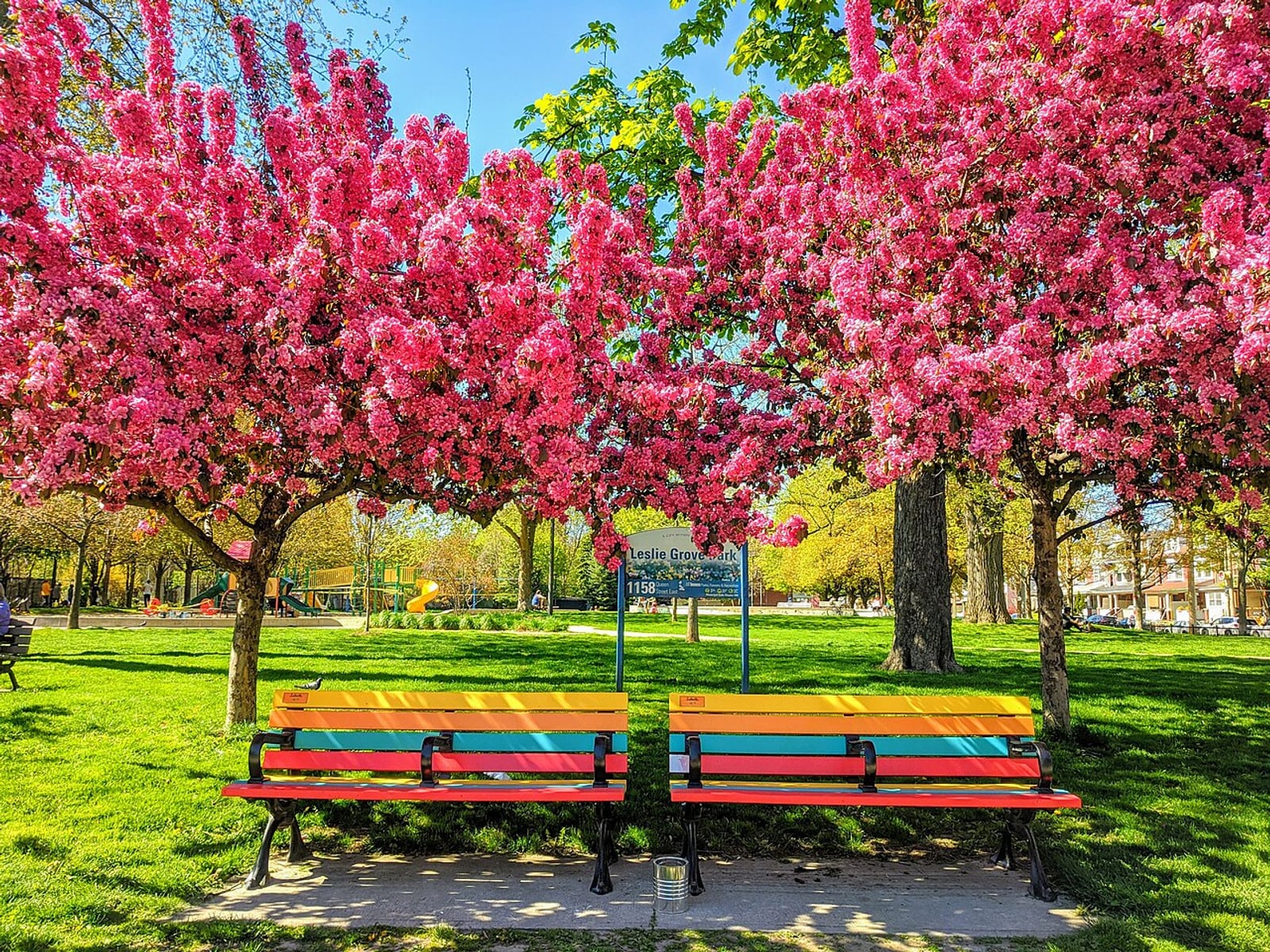
Leslieville
Leslieville keeps a neighbourhood spirit where brunch spots, bakeries and corner shops matter a lot. The streets are less spectacular than downtown, but they show a lived-in city, with families, dogs, bikes and busy cafés. Go when you want to get off the obvious circuit without moving away from Toronto’s energy.
Tip: Plan a relaxed walk along Queen East to get a feel for the neighbourhood rather than aiming for just one address.
The Annex
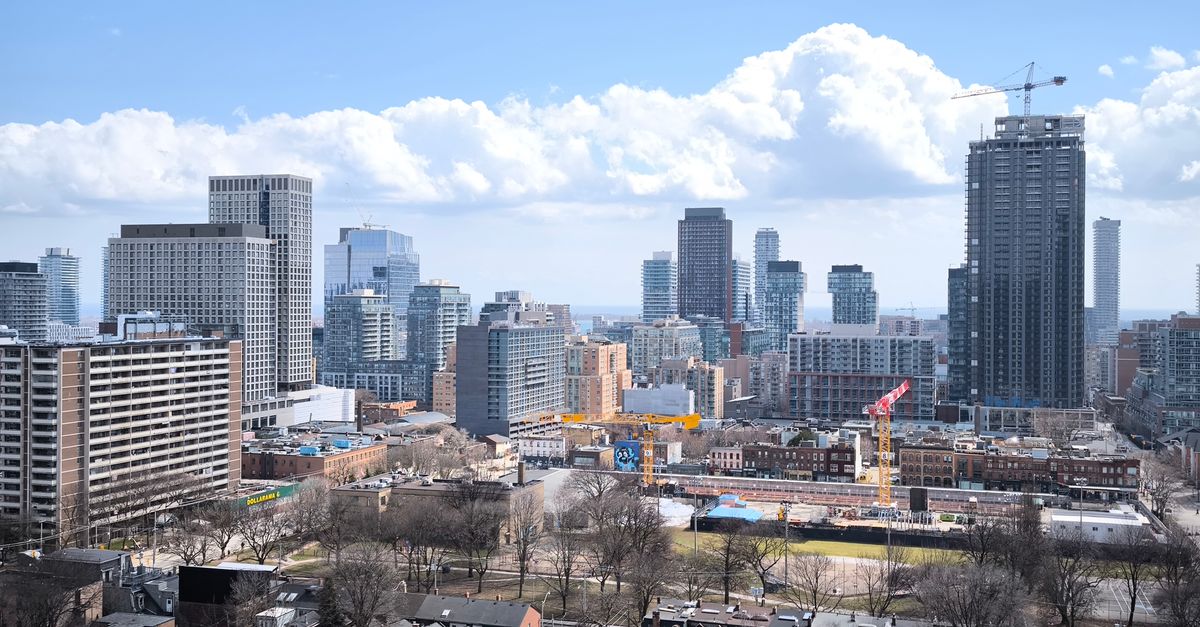
The Annex mixes Victorian houses, bookstores, students, pubs and neighbourhood life. The nearby university brings constant movement, but the residential streets stay peaceful. It is a good area for a pause between two museums, with an intellectual atmosphere that does not feel cold.
Tip: Let yourself be tempted by a bookstore or a café, because the neighbourhood rewards spontaneous stops.
The big sights of Toronto
CN Tower
The CN Tower remains Toronto’s most obvious landmark, visible as soon as you look up downtown. Going up there changes your relationship with the city: the lake becomes immense, the streets form a clear grid, and the neighbourhoods suddenly fall into place. Even if you are not looking for a thrill, the view helps you understand Toronto.
Tip: Choose a clear moment if the view matters a lot to you, because the experience depends heavily on the sky.
Royal Ontario Museum
The Royal Ontario Museum brings together dinosaurs, world cultures, minerals, ancient objects and bold architecture. Its angular facade already sets the tone for a visit where the old and the modern speak to each other. It is a good attraction when the weather makes you slow down or when you want to add depth to your getaway.
Tip: Pick out a few galleries that truly interest you, because the museum can quickly use up all your energy.
Art Gallery of Ontario
The Art Gallery of Ontario offers a lovely pause in a city that moves quickly. You will come across Canadian art, European works, contemporary exhibitions and wood-and-glass architecture that makes the visit feel fluid. The place works just as well for art lovers as it does for a calm walk between two neighbourhoods.
Tip: Start with the Canadian galleries if you want to feel a more direct connection with the country.
St. Lawrence Market
St. Lawrence Market tells the story of Toronto through appetite, with its stalls, cheesemongers, bakeries, delis and ready-to-eat counters. It is a perfect stop when you want to eat without ceremony and watch local life.
Tip: Arrive hungry and share several small things if you are travelling as a group.
Toronto Islands
The Toronto Islands completely change the tone of the trip. From the water, the skyline becomes a clear image, then the island offers paths, beaches, trees and a feeling of escape. It is the place to choose when downtown starts to feel too dense.
Tip: Plan on comfortable shoes, because the pleasure comes mostly from walking without rushing.
Casa Loma
Casa Loma looks like a castle set inside a North American city that does not always take itself too seriously. The towers, rooms, staircases and gardens create a romantic, almost movie-like setting. The visit is especially appealing if you like slightly extravagant places and stories of grand ambition.
Tip: Combine the visit with a walk through the nearby streets to extend the chic residential atmosphere.
High Park
High Park is a big breath of air in the west end of the city. You will find trails, ponds, lawns, old trees and an atmosphere that feels more local than touristy. It is a good counterweight to museums and shopping streets.
Tip: Go when you need a green break rather than an attraction to visit quickly.
Hockey Hall of Fame
The Hockey Hall of Fame speaks to serious fans as much as to curious visitors who want to understand part of Canadian sports culture. The trophies, team memorabilia and interactive areas make the place lively without requiring you to be an expert. It is an easy visit to fit into a day downtown.
Tip: Save this attraction for a moment when you want to stay close to the financial core and downtown’s covered walkways.
A perfect day in Toronto
Morning
Start in Kensington Market with a coffee, a slow walk and a few food stops. Continue to the Art Gallery of Ontario to move from street energy to a calmer atmosphere. The contrast already gives you a good sense of the city: spontaneous outside, very rich inside.
Afternoon
Head to the CN Tower to get some height, then drift toward the lakefront. If you feel like getting some air, continue to the Toronto Islands and leave downtown behind. The return toward the skyline often gives you the day’s most memorable image.
Evening
Come back toward the Distillery District for a walk on the cobblestones and dinner in a more enveloping atmosphere. If you want a more urban end to the evening, finish on Queen West among bars, shop windows and street art. That way, you connect historic, creative and contemporary Toronto without forcing the pace.
How many days do you need in Toronto?
Plan on three days to get a good taste of Toronto without rushing. Keep one day for the main downtown landmarks, another for museums and neighbourhoods, then a final one for the islands, a park or a more local area like Leslieville.
What is the best season for Toronto?
Spring and fall work well if you want to walk for a long time, enjoy the neighbourhoods and avoid the heaviest crowds. Summer puts the lake, the islands and patios at the centre of the trip, with a more festive city. Winter gives you a more indoor Toronto, built around museums, markets, cafés and long warm breaks.
Based on Flight Deal Spot’s tracking, January and November is the cheapest time to go. If your dates are flexible, it’s a good period to compare before choosing.
Plan Toronto
Frequently asked questions
What is the best time to book a Montreal to Toronto flight?
Watch several nearby dates and stay flexible on your departure day. Price drops often happen when demand eases.
How can I find a cheap round-trip flight from Montreal to Toronto?
Compare Toronto airports, avoid very popular dates and keep an alert active. A direct flight can sometimes cost almost the same as a trip with a connection.
Are there direct flights between Montreal and Toronto?
Yes. The share of direct flights observed from Montreal is 100%.
Which airport should I choose in Toronto?
First look at the airport shown in your itinerary, then at the time it takes to reach your neighbourhood. The best choice mostly depends on where you are staying and what you want to do when you arrive.
Is Toronto worth it for a short getaway?
Yes, especially if you like lively neighbourhoods, museums, markets and going out by the lake. The city is easy to visit without having to plan too much.
More guides
VancouverFrom Montreal

Figures from our own price tracking since September 14, 2026, updated automatically: observations, not price promises.